Media
Latest News
Us Rep. Paul A. Gosar (R-AZ) has spoken out against proposed environmental regulations and criticised it for the potential effects it would have on the coal industry. He indicated that the measures put forward by the Office of Natural Resources Revenie (ONRR) would have an impact on the valuation of federal onshore oil, natural gas and coal royalties.
Tuesday, December 8 U.S. Representative Gary Palmer (R from Hoover) warned that new rules to protect streams could cost 280,000 mining jobs.
Today, the Environmental Protection Agency is one of the most powerful and most feared regulatory agencies in the country. What was originally intended to be an agency with a relatively modest charter has become much more powerful. The EPA is now claiming unrestrained authority to issue regulations that have major negative consequences for the American economy with little or no accountability to Congress.
Today, the Environmental Protection Agency is one of the most powerful and most feared regulatory agencies in the country. What was originally intended to be an agency with a relatively modest charter has become much more powerful. The EPA is now claiming unrestrained authority to issue regulations that have major negative consequences for the American economy with little or no accountability to Congress.
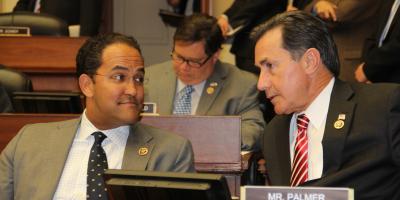
For Immediate Release
Washington D.C. – Congressman Gary Palmer (R-AL), notes the coming end of the 21st session of the Conference of Parties, part of the United Nations Framework Convention on Climate Change, in Paris, France, and calls on the Obama Administration to submit any agreement reached to the Senate for ratification, as required under the Constitution.
Congressman Gary Palmer(AL-06), a member of the Oversight and Government Reform Subcommittee on Interior, attended a hearing Tuesday on the Department of the Interior's (DOI) recently proposedStream Protection Ruleand took a stand against it citing how i

WASHINGTON — The same day President Barack Obama returned to the United States from a climate change conference in Paris, Republican members of Alabama's congressional delegation unanimously voted to block proposed regulations that are at the heart of the President's environmental agenda.
As President Barack Obama meets with world leaders at Paris' United Nations summit, House lawmakers passed legislation to undo a key part of the president's global warming agenda Tuesday.
House lawmakers passed resolutions to repeal the Environmental Protection Agency's so-called Clean Power Plan. House passage of the anti-EPA resolutions comes just two weeks after the Senate passed the Congressional Review Act resolutions to repeal federal rules on power plants.