Media
Latest News
Image
July 31, 2015
For Immediate Release
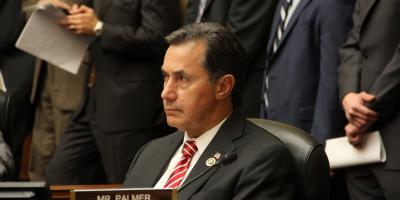
Washington, DC – Rep. Gary Palmer (R-AL), is an original co-sponsor of H.R. 3199, To prohibit statutory sanctions relief by the United States with respect to Iran unless the Senate provides its advice and consent to ratification of the Joint Comprehensive Plan of Action. This bill, introduced by Rep. Dave Brat (R-VA), would not allow the Administration to lift sanctions on Iran unless the Senate gives its consent under Article II Section 2 of the Constitution, which requires a two-thirds vote in the upper chamber.
July 30, 2015
WASHINGTON, D.C. — Disturbed by recent videos allegedly showing Planned Parenthood officials attempting to sell the tissue of aborted babies, Rep. Gary Palmer (R-AL6) led more than fifty U.S. House members in writing a letter to U.S. Attorney General Loretta Lynch, requesting that an independent counsel be appointed to fully investigate the possibility that Planned Parenthood broke the law by selling parts of aborted babies, and by altering their abortion techniques to ensure the right body parts remained intact.
Image
July 30, 2015
For Immediate Release
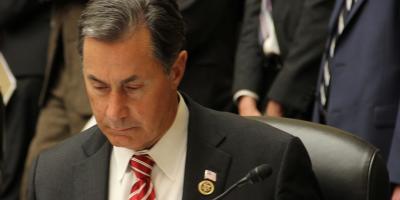
Washington, D.C. –Disturbed by recent videos concerning Planned Parenthood, Rep. Gary Palmer (R-AL) led 55 House colleagues in writing a letter to Attorney General Loretta Lynch, requesting that an independent counsel be appointed to fully investigate the possibility that the Planned Parenthood Foundation of America broke the law by selling parts of aborted babies, and by altering their abortion techniques to ensure the right body parts remained intact.
Image
July 29, 2015
For Immediate Release
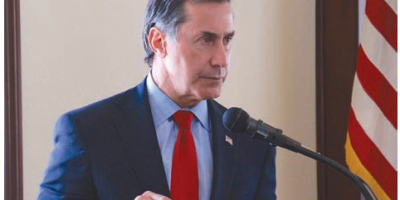
Washington, DC – Rep. Gary Palmer (R-AL), voted for H.R. 1994, the VA Accountability Act of 2015, which passed the House today. The bill is aimed at remedying some of the abuses that have been revealed as part of the Veteran’s Affairs (VA) scandal.
Alabama Republican congressional delegation unanimously supports bill reining in harmful regulations
July 29, 2015
WASHINGTON — A bill which could drastically roll back many of the costly regulations passed each year by executive agencies won overwhelming support from U.S. House Republicans Tuesday, including the affirmative vote of every Republican member of Alabama’s delegation.
July 28, 2015
Monday, July 27, US Representative Gary Palmer (R-Alabama) announced that he was joining his fellow members of the House Oversight and Government Reform Committee in calling for President Obama to remove IRS Commissioner John Koskinen.
Congressman Palmer said in a statement, "Mr. Koskinen has repeatedly provided misleading testimony to Congress and has failed to comply with a Congressional subpoena. This behavior is unacceptable, particularly for someone in such a powerful position."
Image
July 27, 2015
For Immediate Release
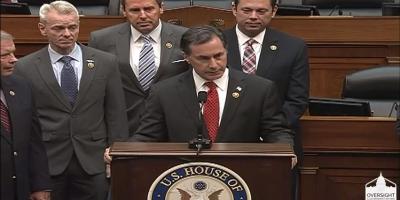
Washington D.C. - Rep. Gary Palmer (R-AL) joins his fellow members of the House Oversight and Government Reform Committee in calling for President Obama to remove IRS Commissioner John Koskinen. Mr. Koskinen repeatedly gave misleading and false testimony to Congress, and failed to preserve evidence related to the troubling scandal where various conservative non-profit organizations were targeted by the Internal Revenue Service (IRS) for exercising their right to freedom of speech.
Issues:Tax Reform
July 27, 2015
WASHINGTON, D.C. — In a vote of 241 to 179, the U.S. House of Representatives approved Thursday the “Enforce the Law for Sanctuary Cities Act” in response to growing outrage over lack of immigration enforcement which some believe led to the death of Katie Steinle in San Francisco earlier this month.
July 27, 2015
Wednesday, July 22, Congressman Gary Palmer (R-Alabama) announced that he is an original co-sponsor of HR3118, the Repeal CFPB Act, that was introduced this week by Rep. John Ratcliffe (R-Texas). Palmer said in a press release that this bill would repeal the misleadingly named Consumer Financial Protection Bureau (CFPB), a federal agency fundamentally unaccountable to Congress, the President, and the Courts.
Issues:Financial Services
July 24, 2015
Thursday, July 23 U.S. Representatives Gary Palmer (R from Hoover) and Bradley Byrne (R from Montrose) both voted in favor of H.R. 3009, the Enforce the Law for Sanctuary Cities Act, which passed the House today. This bill cuts off specific federal law enforcement grants for “sanctuary” cities. The legislation defines sanctuary cities as those cities which refuse to cooperate with the Immigration and Naturalization Services (INS) or other government agencies charged with immigration, or have laws that bar law enforcement from inquiring about a suspect’s immigration status.